

The holiday season in Michigan is beautiful, but it can be tough on your home. Between freezing cold conditions, heavy snowfall, icy conditions, and fluctuating temperatures, December through February can put significant stress on your property.
Whether you own a home in Troy, Sterling Heights, Rochester Hills, Birmingham, Warren, or anywhere throughout Metro Detroit, preparing your property before the colder month arrive can help prevent expensive repairs, improve energy efficiency, and protect your property’s long-term value.
The good news? A little preparation in November and December can make a big difference.
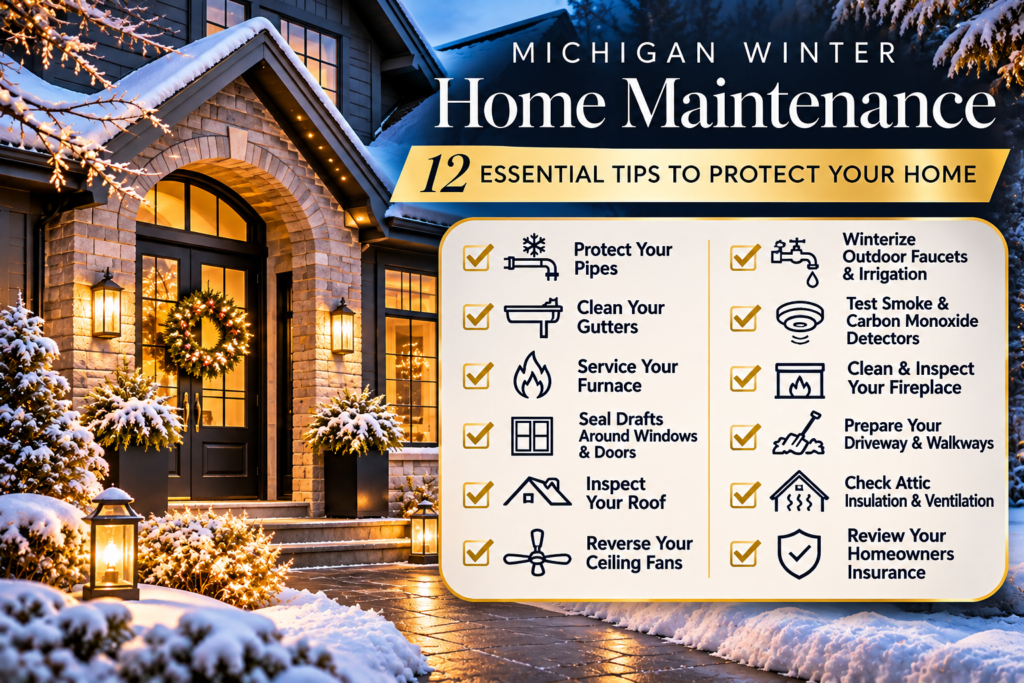
From protecting your pipes to inspecting your roof, here are 12 essential recommendations to help prepare your home for the colder months that every Metro Detroit homeowner should know.
1. Protect Your Pipes From Freezing
Frozen pipes are one of the most expensive problems homeowners can experience.
When temperatures drop, exposed plumbing in basements, crawl spaces, garages, and exterior walls becomes particularly vulnerable.
What you should do:
- Insulate exposed pipes in unheated areas.
- Disconnect and drain outdoor garden hoses.
- Shut off and drain exterior faucets if your home has interior shutoff valves.
- Keep your property’s thermostat at a consistent temperature, even when you’re away.
- Open cabinet doors beneath kitchen and bathroom sinks when temperatures become extremely cold, especially if plumbing is located along exterior walls.
If you’re leaving town for the holidays, consider asking someone to check your home periodically.
Homeowner tip: Know where your main water shutoff valve is located. If a pipe bursts, shutting off the water quickly can help minimize damage.
2. Clean Your Gutters Before Snow and Ice Arrive
Gutters might not be the most exciting part of seasonal upkeep, but they play an essential role in protecting your property.
When leaves, dirt, and debris collect in gutters, melting snow and rainwater may not drain properly. During freezing cold conditions, trapped water can contribute to ice buildup and increase the risk of damage to gutters, roofing, and areas around your home’s foundation.
Before fall ends:
- Remove leaves and debris from gutters.
- Check downspouts for blockages.
- Make sure downspouts direct water away from your foundation.
- Look for loose or damaged gutter sections.
- Consider installing gutter guards if appropriate for your property.
Taking care of your gutters now can help prevent water-related problems during the colder months.
3. Have Your Furnace Inspected and Replace Your Air Filter
Your heating system becomes one of the hardest-working components of your property during the months between December and March.
The last thing anyone wants is to discover their furnace isn’t working properly when temperatures are below freezing.
Before December arrives, schedule a professional HVAC inspection if you haven’t already.
Your cold-weather heating checklist:
- Replace your furnace filter according to the manufacturer’s recommendations.
- Have your heating system professionally inspected.
- Make sure vents and returns aren’t blocked by furniture or household items.
- Check your thermostat settings.
- Listen for unusual noises coming from your furnace.
A clean filter helps maintain proper airflow and can improve system performance.
Regular maintenance can also help identify potential problems before they turn into unexpected heating emergencies.
For additional ways to improve your home’s energy efficiency during colder months, explore the U.S. Department of Energy’s Energy Saver guide.
4. Check Windows and Doors for Drafts
Have you noticed certain rooms in your property always feel colder than others?
Drafty windows and doors could be contributing to the problem.
Small gaps around windows, door frames, and other openings can allow cold air to enter while letting heated air escape.
Easy ways to improve your home’s insulation:
- Replace worn weatherstripping.
- Apply caulk around appropriate window and door gaps.
- Install door sweeps where needed.
- Use insulated curtains during particularly cold weather.
- Check basement windows for drafts.
You don’t necessarily need to replace your windows to improve comfort. Sometimes, relatively inexpensive improvements can make a noticeable difference.
5. Inspect Your Roof for Potential Problems
Your roof protects your entire home, making it especially essential to inspect before heavy snow and ice arrive.
Colder months can bring snow accumulation, freezing rain, and repeated freeze-thaw cycles that expose existing roofing problems.
Look for warning signs such as:
- Missing, cracked, or curling shingles.
- Damaged flashing around chimneys and vents.
- Loose gutters or downspouts.
- Water stains on ceilings or attic surfaces.
- Signs of moisture or leaks in the attic.
If you notice anything concerning, contact a qualified roofing professional.
Important: Avoid climbing onto an icy or snow-covered roof. Roof inspections and repairs should be handled safely by qualified professionals.
6. Reverse Your Ceiling Fans
Here’s a simple cold-weather tip that many homeowners overlook!
If your ceiling fans have a reversible setting, switch them to rotate clockwise at a low speed during colder months.
Warm air naturally rises, so changing the fan direction can help gently circulate warmer air back down into the living space.
This can make rooms feel more comfortable without constantly increasing your thermostat.
Just remember to use a low speed to avoid creating a cooling breeze.
7. Protect Your Outdoor Faucets, Sprinklers, and Irrigation System
Outdoor plumbing needs attention before freezing cold conditions become consistent.
Water left inside exterior plumbing lines can freeze, expand, and cause pipes or fixtures to crack.
Before cold weather hits:
- Disconnect all garden hoses.
- Drain outdoor faucets and hoses.
- Prepare sprinkler systems according to the manufacturer’s recommendations before freezing temperatures arrive.
- Shut off exterior water lines where applicable.
- Store hoses and outdoor watering equipment.
If you have an irrigation system, consider hiring a professional to properly prepare it for freezing temperatures.
This small preventative step can help you avoid costly plumbing repairs when spring arrives.
8. Test Smoke and Carbon Monoxide Detectors
During colder months, homeowners often spend more time indoors and rely heavily on heating systems, fireplaces, and other appliances.
That makes working smoke and carbon monoxide detectors especially important.
Before the holidays:
- Test every smoke detector.
- Test carbon monoxide detectors.
- Replace batteries when needed.
- Check expiration dates and replace outdated units.
- Make sure detectors are installed in the appropriate locations throughout your property.
Carbon monoxide is odorless and colorless, making functioning detectors essential.
Never ignore a carbon monoxide alarm. Leave the home and contact emergency services if it activates.
You can find additional fire prevention and home safety recommendations through the National Fire Protection Association.
9. Clean and Inspect Your Fireplace and Chimney
Nothing feels quite as cozy as relaxing beside a fireplace during a Metro Detroit snowstorm.
However, before lighting your first fire, make sure your fireplace and chimney are ready.
Creosote buildup, debris, and damaged chimney components can create serious fire and ventilation hazards.
Your fireplace checklist:
- Have your chimney inspected and cleaned when recommended.
- Check the damper to ensure it opens and closes properly.
- Look for visible cracks or deterioration.
- Make sure the fireplace area is clear of combustible materials.
- Keep a properly functioning fire extinguisher accessible.
If you use a wood-burning fireplace regularly, professional chimney maintenance is especially essential.
10. Prepare Your Driveway and Walkways for Snow and Ice
Cold-weather safety starts outside your front door.
Snow and ice can create dangerous conditions for homeowners, family members, guests, and delivery drivers.
Before the first major snowfall, make sure you have everything you need.
Get ready by:
- Checking your snowblower and replacing fuel if necessary.
- Testing your snow shovel for damage.
- Stocking up on appropriate ice melt.
- Checking outdoor lighting near entrances and walkways.
- Making sure downspouts aren’t creating icy walkways.
- Identifying areas where snow tends to accumulate.
Consider keeping a small container of ice melt near your main entrance for quick access.
A little preparation can help prevent slips, falls, and unnecessary headaches.
11. Check Your Attic Insulation and Ventilation
Your attic plays a bigger role in home performance than many homeowners realize.
Proper insulation helps maintain indoor temperatures, while adequate ventilation helps manage moisture and temperature conditions in the attic.
Insufficient insulation or ventilation can contribute to uneven indoor temperatures, moisture problems, and ice dam formation under certain conditions.
Things to look for:
- Uneven or insufficient insulation.
- Signs of moisture or water staining.
- Visible mold or condensation.
- Blocked attic ventilation.
- Evidence of pests or unwanted openings.
If you’re unsure about your attic’s condition, have a qualified insulation or roofing professional evaluate it.
12. Review Your Homeowners Insurance Before Winter Storm Season
This is one task homeowners often forget until something goes wrong.
Severe storms can lead to roof damage, frozen pipes, water damage, and other unexpected problems.
Take a few minutes to review your homeowners insurance policy before the worst of winter arrives.
Consider checking:
- What types of cold-weather damage are covered?
- Are there exclusions related to frozen pipes or neglected maintenance?
- What is your deductible?
- Does your policy cover temporary living expenses if your property becomes uninhabitable after a covered loss?
- Do you have adequate coverage for your home’s current value and belongings?
Coverage varies by policy, so contact your insurance provider with questions about your specific situation.
Being familiar with your coverage before an emergency can make an already stressful situation easier to navigate.
Bonus: Create a Winter Home Emergency Kit
Metro Detroit weather can be unpredictable. Between snowstorms, power outages, and icy roads, having basic supplies ready is always a smart idea.
Consider putting together a colder weather emergency kit that includes:
- Flashlights and extra batteries.
- A first-aid kit.
- Bottled water.
- Nonperishable food.
- Blankets and warm clothing.
- Phone charging banks.
- Necessary medications.
- A battery-powered or hand-crank radio.
- Basic supplies for pets.
Keep your supplies somewhere accessible so everyone in your household knows where to find them.
For more information about preparing your household for severe seasonal weather, visit Ready.gov’s Winter Weather preparedness guide.
Does Winter Home Maintenance Affect Your Property Value?
Absolutely. While completing every maintenance task doesn’t automatically increase your home’s market value, keeping up with routine maintenance can help protect the condition of your property and prevent issues that could become concerns during a future sale.
When buyers tour a home, they’re looking beyond the kitchen, bathrooms, and overall appearance. They also want confidence that the property has been cared for.
Signs of deferred maintenance, roof concerns, water damage, or heating system problems can create hesitation during the buying process.
This is especially important across Metro Detroit, where every community has its own housing characteristics and buyer expectations.
For example, homeowners preparing to sell in Troy, Michigan, Rochester Hills, and Birmingham may be appealing to buyers looking for different property styles, neighborhood amenities, and price points.
Meanwhile, homeowners in Sterling Heights, Warren, and Shelby Township may find that maintaining their property’s condition is an essential part of getting ready for future buyer interest.
If you’re considering selling your Metro Detroit home in 2027, December is an excellent time to start preparing.
Use the colder months to:
- Address outstanding repairs.
- Organize maintenance records.
- Review recent home improvements.
- Evaluate your home’s current market position.
- Start planning which updates are worth completing before listing.
Not every renovation is worth the investment. Understanding what buyers in your neighborhood are looking for can help you prioritize your time and money.
Curious about your property’s current value? Connect with Top Agent Realty to discuss your property’s market position and selling options.
Thinking About Buying or Selling a Home This Winter?
Many people assume the real estate market completely slows down once the holidays arrive. While seasonal activity can change, real estate decisions don’t necessarily stop when the temperature drops.
Colder months can create opportunities for prepared buyers, while sellers may benefit from having less competing inventory in certain neighborhoods.
The right strategy depends on your property, location, timeline, and current market conditions.
If you’re researching where to live, Top Agent Realty offers community-specific resources to help you understand the different areas throughout Metro Detroit.
Explore some of our local community guides:
- Troy, MI: Neighborhoods and Real Estate
- Sterling Heights, MI: Homes and Community Information
- Rochester Hills, MI: Homes and Neighborhoods
- Warren, MI: Real Estate and Community Insights
- Royal Oak, MI: Homes and Local Real Estate
- Novi, MI: Real Estate and Homes for Sale
- Northville, MI: Homes and Community Information
- Livonia, MI: Homes and Real Estate
You can also explore our complete Metro Detroit community directory to discover additional cities and neighborhoods.
Want to compare two communities before making a move? Check out our existing guides:
- Living in Troy, Michigan: A 2026 Neighborhood and Lifestyle Guide
- Living in Warren, MI: Community Insights and Real Estate Market Highlights
- Troy vs. Rochester Hills: An Honest Comparison for Buyers
- Warren vs. Sterling Heights: Which Is Better for First-Time Buyers?
Ready to start looking? Browse available Metro Detroit homes and explore what’s currently on the market.
Final Thoughts: A Little Preparation Goes a Long Way
Colder months aren’t going anywhere, but preparing your home doesn’t have to be overwhelming.
Taking care of your plumbing, heating system, roof, gutters, windows, and outdoor spaces before temperatures drop can help protect your investment and make your property more comfortable throughout the season.
Whether you’re staying in your home for years to come or considering a move in the new year, maintaining your property is always a worthwhile investment.
At Top Agent Realty, we believe real estate is about more than buying and selling homes. It’s about helping people make informed decisions, protect their investments, and feel confident about where they live.
Have questions about your property’s value or your next real estate move?
Let’s talk!
Visit Top Agent Realty to explore your options, browse available properties, or connect with our Metro Detroit real estate team.
Top Agent Realty
1985 W Big Beaver Rd, Suite 320
Troy, MI 48084
Phone: (248) 277-4226
Website: https://topagentrealtymi.com/
Disclaimer: This article is intended for general educational purposes and is not a substitute for professional HVAC, plumbing, roofing, electrical, insurance, or other specialized advice. Consult qualified professionals for property-specific inspections, repairs, and recommendations.